Understanding PQP: The Key to COE Renewal Costs

When it comes to COE renewal, the Prevailing Quota Premium (PQP) is the most important number you need to understand. This guide explains what PQP is, how it is calculated, and how it affects your renewal cost.

What is PQP?

The Prevailing Quota Premium (PQP) is a 3-month moving average of the Quota Premium (QP) from the last three bidding exercises. It is used as the basis for calculating COE renewal costs. The PQP is updated after each bidding exercise and is published by LTA on the OneMotoring website.

How PQP is Calculated

The PQP is calculated as the simple average of the QP from the last three bidding exercises for each category. For example, if the last three Cat A QPs were $120,000, $122,000, and $116,000, the PQP would be ($120,000 + $122,000 + $116,000) / 3 = $119,333.

PQP vs Current Bidding Price

It is important to understand that the PQP is different from the current bidding price. The current bidding price is what you pay when buying a new vehicle with a COE. The PQP is what you pay when renewing an existing COE. The PQP tends to be more stable than the current bidding price because it is an average.

Current PQP Rates (April 2026)

  • Category A: $119,432
  • Category B: $118,956
  • Category C: $81,200
  • Category D: $9,100
  • Category E: $122,100


COE Renewal Calculator

Estimate your renewal cost & monthly repayments

%
% p.a.
Current PQP (Cat A): S$119,432


Ready to Renew Your COE?

Join 5,000+ satisfied customers who renewed their COE through COEPLUS — completely free of charge. Get your personalised quote in minutes.

Read More...

How to Get the Best COE Renewal Loan Rate in Singapore

With COE prices at record highs, securing the best possible loan rate for your COE renewal can save you thousands of dollars over the loan tenure. Here are expert tips on how to get the best rate.

Understand How COE Loan Rates Work

COE renewal loan rates in Singapore typically range from 1.5% to 5% per annum, depending on the lender and your credit profile. The rate is applied on the reducing balance, meaning you pay interest only on the outstanding loan amount.

Factors That Affect Your Loan Rate

  • Credit Score: A good credit history leads to better rates
  • Income: Higher income and stable employment improve your chances
  • Loan Amount: Larger loans may attract better rates
  • Loan Tenure: Shorter tenures typically have lower rates
  • Vehicle Age: Newer vehicles may qualify for better rates

How COEPLUS Helps

COEPLUS submits your application to multiple banks simultaneously and negotiates on your behalf. Because we bring volume to our partner banks, we can often secure rates that are not available to individual applicants. Best of all, our service is completely free.

Tips to Improve Your Loan Application

  1. Check your credit report before applying
  2. Ensure your income documents are up to date
  3. Avoid applying for multiple loans simultaneously
  4. Consider a shorter loan tenure if you can afford higher monthly payments


COE Renewal Calculator

Estimate your renewal cost & monthly repayments

%
% p.a.
Current PQP (Cat A): S$119,432
Read More...

COE Prices Hit New High in April 2026: What You Need to Know

The latest COE bidding results for April 2026 have shown Category A prices reaching $123,010 and Category E hitting $125,002, continuing the upward trend seen over the past several months. For vehicle owners planning to renew their COE, understanding these price movements is crucial for financial planning.

Why Are COE Prices So High?

Several factors are driving COE prices to record levels. First, the supply of COE quotas has been tightened as the government works to manage vehicle population growth. Second, demand remains strong despite the high prices, particularly for Category B vehicles. Third, the economic recovery has boosted consumer confidence and spending power.

What This Means for COE Renewal

For vehicle owners whose COE is expiring, the high PQP (Prevailing Quota Premium) means renewal costs are significant. However, with proper financing through COE Plus, you can spread the cost over several years with manageable monthly repayments.

Tips for Managing High COE Renewal Costs

  • Consider a 5-year renewal if you are uncertain about keeping the vehicle long-term
  • Compare financing rates from multiple banks — COE Plus does this for free
  • Start the renewal process early to avoid last-minute pressure
  • Review your motor insurance at the same time to potentially save on premiums

Contact COE Plus today for a free consultation on your COE renewal options.


COE Renewal Calculator

Estimate your renewal cost & monthly repayments

%
% p.a.
Current PQP (Cat A): S$119,432


Ready to Renew Your COE?

Join 5,000+ satisfied customers who renewed their COE through COEPLUS — completely free of charge. Get your personalised quote in minutes.

Read More...
COEPLUS.COM: Renew Your COE!

What Is COE

📚 Educational Guide · COEPLUS.COM

What is COE? A Complete Guide for Singapore Vehicle Owners

⏱ 4 min read📅 Updated June 2026✅ Verified by COEPLUS Team

HomeResourcesWhat is COE?

What is COE?

COE stands for Certificate of Entitlement. It is a licence granted by Singapore’s Land Transport Authority (LTA) that gives the holder the right to own and operate a vehicle on Singapore’s roads for a period of either 5 or 10 years.

Without a valid COE, a vehicle cannot be legally registered or driven in Singapore. When you buy a new car in Singapore, the COE cost is included in the purchase price. When your COE expires, you must either renew it (pay for a new COE) or deregister the vehicle and scrap or export it.

Simple definition: COE is essentially a time-limited licence to own a vehicle in Singapore. You are not buying the vehicle outright — you are also buying the right to use it on the road for a fixed period.

Why Does Singapore Have COE?

Singapore is one of the most densely populated cities in the world, with a land area of just 733 km². Unlike most countries, Singapore uses the COE system to actively manage the total number of vehicles on its roads.

The COE system was introduced in 1990 by LTA as part of the Vehicle Quota System (VQS). The goal is straightforward: by controlling how many new vehicles are registered each year, Singapore keeps traffic congestion manageable and roads functional.

Each month, LTA determines how many new COEs are available based on deregistrations and transport planning targets. This quota is then auctioned through a competitive bidding exercise — and the price you pay is determined entirely by demand.

Key insight: COE prices are not set by the government. They are determined by market forces — specifically, by how much Singapore buyers are willing to bid. High demand for new cars drives COE prices up; low demand brings them down.

COE Categories Explained

LTA divides vehicles into five categories, each with its own COE quota and bidding price:

Category Vehicle Type Common Examples
Cat A Cars up to 1,600cc engine capacity AND up to 130bhp Toyota Vios, Honda Jazz, Mazda 2
Cat B Cars above 1,600cc OR above 130bhp BMW 3 Series, Toyota Camry, Volvo XC60
Cat C Goods vehicles and buses Vans, lorries, buses
Cat D Motorcycles All motorcycles and scooters
Cat E Open category — any vehicle except motorcycles Can be used for any Cat A–C vehicle

Cat E COEs are the most flexible but typically the most expensive, as they can substitute for any other category. Many buyers of Cat B vehicles end up bidding in Cat E if Cat B prices are lower there, or vice versa.

How the Bidding System Works

LTA conducts COE bidding exercises on the 1st and 3rd Wednesday of every month. Each exercise runs for two days, and the results are published on the LTA website.

You do not need to bid yourself. When you buy a new vehicle from a dealer or apply for COE renewal through COEPLUS, your agent handles the bidding on your behalf. You simply pay the final COE price.

The bidding system works as follows:

  1. LTA announces the available quota for each category before each exercise.
  2. Buyers (or their authorised dealers/brokers) submit sealed bids stating the maximum amount they are willing to pay.
  3. At the end of the bidding period, all successful bidders pay the same price — the Quota Premium (QP), which is the lowest successful bid that clears the available quota.
  4. Unsuccessful bidders (those who bid below the clearing price) do not get a COE and must try again in the next exercise.

COE and Vehicle Renewal

Every COE has a 10-year lifespan (or 5 years if you chose a shorter term). When it expires, you have three options:

  • Renew for 5 years — pay 50% of the current Prevailing Quota Premium (PQP)
  • Renew for 10 years — pay 100% of the current PQP
  • Deregister the vehicle — scrap it or export it, and claim any applicable PARF rebate

The PQP (Prevailing Quota Premium) is not the same as the latest bid price. It is a 3-month moving average of COE prices for the relevant category. This makes renewal costs more predictable and less volatile than if they tracked the latest bidding result directly.

📌 As of June 2026, the Cat A PQP is approximately S19,432. Use the COEPLUS Calculator below to see your exact renewal cost with current live data.

How COE Affects Your Vehicle Costs

COE is one of the largest costs of owning a vehicle in Singapore. For a Cat A vehicle with a PQP of S19,432, the 10-year renewal cost alone is over S19,000 — before financing costs. This is why financing the COE through a bank loan is extremely common.

Cost Component What It Is Typical Amount (Cat A)
COE (PQP) The certificate itself ~S19,432 (10-year)
COE Loan Interest If financed via bank ~S,000–10,000 over 7 yrs
Road Tax Annual fee to use the road S00–2,000/year
Insurance Annual vehicle insurance S00–2,500/year
Servicing Annual maintenance S00–1,500/year

The COE system means that Singapore has some of the highest vehicle ownership costs in the world — but also some of the best-maintained road networks and lowest congestion levels among major global cities.

Ready to Calculate Your COE Renewal Cost?

Use the free COEPLUS Calculator to see your exact monthly repayment using the latest live PQP data.


Read More...
Busy city street in Singapore featuring several cars with modern building facade.

5-Year Vs 10-Year Renewal Updated

📚 Educational Guide · COEPLUS.COM

5-Year vs 10-Year COE Renewal: Which Is Right for You?

⏱ 5 min read📅 Updated June 2026✅ Verified by COEPLUS Team

HomeResources5-Year vs 10-Year COE Renewal

The Key Difference: Cost and Commitment

When your COE expires, you choose between renewing for 5 years or 10 years. The choice affects not just how long you keep the vehicle, but how much you pay upfront and monthly.

The core rule: A 5-year renewal costs 50% of the current PQP. A 10-year renewal costs 100% of the current PQP. The PQP (Prevailing Quota Premium) is the 3-month moving average of COE prices for your vehicle category.

This means if Cat A PQP is S19,432 today:

  • 5-year renewal: S9,716 COE cost
  • 10-year renewal: S19,432 COE cost

Full Cost Breakdown

Here is a full comparison using Cat A PQP of S19,432, 100% loan financing at 2.48% p.a. over 7 years:

Cost Component 5-Year Renewal 10-Year Renewal
COE Cost (PQP) S9,716 S19,432
Total Loan Interest (7yr, 2.48%) ~S,640 ~S,280
Total Cost (loan + interest) ~S3,356 ~S26,712
Monthly Installment ~S56 ~S,511
Cost per year of vehicle use ~S2,671 ~S2,671
Notice: The cost per year of vehicle ownership is almost identical between 5-year and 10-year renewal — roughly S2,671/year in both cases. The key difference is the total commitment and monthly cash flow, not the long-term value.

Monthly Payment Comparison

The monthly repayment difference is significant. Using the same loan tenure of 7 years:

Scenario 5-Year COE 10-Year COE
Loan over 5 years (60 months) S,067/month S,133/month
Loan over 7 years (84 months) S56/month S,511/month
Loan over 10 years (120 months) S28/month S,055/month

Note that for 5-year renewals, your loan tenure cannot exceed the COE period (5 years), so maximum loan tenure is 5 years. For 10-year renewals, you can spread the loan up to 10 years.

Important: Your loan tenure cannot exceed your COE remaining period. A 5-year COE limits you to a maximum 5-year loan. A 10-year COE allows up to a 10-year loan — giving you more flexibility to lower your monthly payment.

When to Choose 5-Year Renewal

A 5-year renewal makes sense if:

  • You plan to change vehicles in the next 5–7 years (whether to a new car, an EV, or no car at all)
  • COE prices are currently high and you expect them to fall — you lock in only 50% of the current PQP rather than 100%
  • Your vehicle is ageing — if your car is already 10 years old, paying for a 10-year COE on a vehicle that may require costly repairs is risky
  • You value flexibility — in 5 years you can reassess the market, EV availability, and your own driving needs
  • Lower total outlay is important — a 5-year renewal halves your upfront COE cost
Best scenario for 5-year: Your car is in good condition, COE prices are near historical highs, and you’re not certain you’ll want to keep the vehicle for another decade.

When to Choose 10-Year Renewal

A 10-year renewal makes sense if:

  • You love your current vehicle and want to drive it for another decade without the hassle of changing
  • COE prices are currently low — locking in 100% of a low PQP can be excellent value long-term
  • Lower monthly payments matter — a 10-year COE allows a longer loan tenure (up to 10 years), spreading the cost further
  • Your vehicle is well-maintained with low mileage and reliable mechanical condition
  • You want certainty — knowing your vehicle situation is settled for 10 years has real value
Best scenario for 10-year: Your car is in excellent condition, COE prices are at or below the historical average, and you want the lowest possible monthly payment over the longest period.

Decision Framework

Use these three questions to guide your choice:

Question Points to 5-Year Points to 10-Year
How long do you plan to keep this vehicle? Less than 7 years More than 7 years
How is your vehicle’s current condition? High mileage, some issues Low mileage, well maintained
What are COE prices doing? Near historical highs At or below average

Calculate Your 5-Year vs 10-Year Monthly Cost

Use the COEPLUS Calculator to compare both options side by side with your actual PQP and loan preferences.

Read More...
Vibrant historic building with multicolored windows at dusk, Singapore City street view.

Understanding PQP: How Your COE Renewal Cost Is Calculated

📚 Educational Guide · COEPLUS.COM

Understanding PQP: How Your COE Renewal Cost Is Calculated

⏱ 3 min read📅 Updated June 2026✅ Verified by COEPLUS Team

HomeResourcesUnderstanding PQP

What is PQP?

PQP stands for Prevailing Quota Premium. It is the price used to calculate how much you pay when you renew your COE. If you are renewing for 10 years, you pay 100% of the PQP. If you are renewing for 5 years, you pay 50% of the PQP.

Simple rule: Your COE renewal cost = PQP × renewal multiplier (1.0 for 10 years, 0.5 for 5 years). The PQP is determined by LTA, not by your dealer or broker.

How PQP is Calculated

The PQP is a 3-month moving average of the Quota Premium (QP) from the most recent three bidding exercises for the same COE category.

In practice, this means:

  1. LTA looks at the QP (winning bid price) from each of the last 3 bidding exercises for your category
  2. It calculates the simple average of those 3 figures
  3. That average becomes the PQP used for renewals processed during the current month
Example: If Cat A COE clearing prices in the last 3 exercises were S18,000, S21,000, and S19,296, the PQP would be (118,000 + 121,000 + 119,296) ÷ 3 = S19,432.

LTA updates the PQP after each bidding exercise. Because it is a moving average of three exercises, the PQP changes more slowly and smoothly than the latest bid price — it dampens sudden spikes or drops.

PQP vs Latest COE Bid Price

Many vehicle owners confuse the PQP with the latest COE bidding result. They are different figures and serve different purposes:

COE Bid Price (QP) PQP
What it is The actual clearing price from the latest bidding exercise 3-month moving average of QP
Changes Every bidding exercise (twice monthly) After each bidding exercise, but more gradually
Used for Buying a new vehicle Renewing an existing COE
Volatility Can jump or fall sharply More stable — dampened by the averaging
Key point: If you read in the news that “COE prices fell sharply this week”, your renewal cost will not change by the same amount immediately — it will only gradually shift as the new lower price is incorporated into the 3-month average over the next few exercises.

Current PQP Values

PQP values are published by LTA and updated by COEPLUS after each bidding exercise. The COEPLUS Calculator always uses the most current PQP figures. Click the ↻ Refresh button in the calculator to load the very latest values.

Category Vehicle Type PQP (June 2026, indicative)
Cat A Cars ≤1,600cc and ≤130bhp ~S19,432
Cat B Cars >1,600cc or >130bhp ~S21,000
Cat C Goods vehicles and buses ~S3,500
Cat E Open category ~S23,000

⚠ PQP values change regularly. Always use the COEPLUS Calculator for the latest figures before making any decisions.

How PQP Affects Your Renewal Cost

Your renewal cost is determined entirely by the PQP at the time your renewal is processed — not when you begin the application. This means:

  • If PQP rises between when you start your application and when it is processed, you pay the higher amount
  • COEPLUS monitors PQP movements and advises clients on optimal timing where possible
  • The PQP used is always the one published by LTA at the time of your renewal registration
📌 The COEPLUS Calculator uses live PQP data and shows you the exact renewal cost — click ↻ Refresh to ensure you have the most current figure.

Does Timing Your Renewal to PQP Matter?

Theoretically, renewing when the PQP is lower saves money. In practice, timing the PQP is difficult because:

  • PQP movements are hard to predict — COE prices depend on demand, LTA quota decisions, and economic conditions
  • You can only renew up to 3 months before your COE expires — so your timing window is limited
  • Waiting too long risks your COE expiring, which makes the vehicle illegal to drive
COEPLUS recommendation: Start the renewal process 6–8 weeks before your COE expiry. This gives enough time for bank approval and processing, without the risk of your COE lapsing. Don’t try to time the PQP — the variation within a 3-month window is rarely large enough to justify the risk.

See Your Exact Renewal Cost with Live PQP

The COEPLUS Calculator updates automatically with the latest PQP values. Get your monthly repayment estimate in seconds.

Read More...
Close-up of a business handshake as car keys are handed over, symbolizing a new car purchase.

COE Financing Guide

📚 Educational Guide · COEPLUS.COM

COE Financing Explained: Banks, Rates, and What to Look For

⏱ 6 min read📅 Updated June 2026✅ Verified by COEPLUS Team

HomeResourcesCOE Financing Guide

What is a COE Loan?

A COE loan (also called a COE renewal loan) is a personal loan specifically designed to finance the cost of renewing your vehicle’s Certificate of Entitlement. Because COE renewal can cost S0,000–S30,000 or more depending on your vehicle category, most Singapore vehicle owners choose to finance the cost through a bank rather than paying cash upfront.

Good news: COEPLUS’s COE renewal service is completely free. You do not pay COEPLUS anything for sourcing, comparing, or arranging your COE loan. We earn a referral from the bank — you get the loan at the same or better rate than approaching the bank directly.

How COE Financing Works

The process is straightforward:

  1. Submit your application — COEPLUS collects your details (personal, vehicle, income) via our online form, optionally pre-filled via SingPass MyInfo
  2. We compare rates — COEPLUS submits your profile to 15+ partner banks simultaneously and identifies the best offer for your profile
  3. Bank approval — typically 3–7 working days. The bank assesses your credit profile and income
  4. Loan disbursement — the approved loan amount is paid directly to LTA to complete your COE renewal
  5. You repay monthly — you make fixed monthly repayments to the bank over your chosen loan tenure
Note on loan tenure: Your COE loan tenure cannot exceed the length of your COE. If you renew for 5 years, your maximum loan tenure is 5 years. For a 10-year COE, you can choose up to 10 years — allowing lower monthly payments.

Interest Rates Explained

COE loans in Singapore use a flat interest rate, not a reducing balance rate. This is important to understand when comparing offers.

Flat rate vs effective rate: A flat rate of 2.48% p.a. means interest is calculated on the original loan amount for every year of the loan — not on the reducing balance. The effective interest rate (EIR) is approximately double the flat rate. A 2.48% flat rate is roughly equivalent to a 4.7–4.9% EIR.

When comparing COE loan offers, always compare flat rates to flat rates — don’t mix flat and EIR figures or the comparison will be misleading.

Loan Amount Rate (Flat p.a.) Tenure Monthly Payment Total Interest
S19,432 (Cat A, 10yr) 2.48% 7 years S,511 S,280
S19,432 (Cat A, 10yr) 2.68% 7 years S,526 S,762
S19,432 (Cat A, 10yr) 2.88% 7 years S,542 S0,244
S9,716 (Cat A, 5yr) 2.48% 5 years S,067 S,640

Even a 0.4% difference in flat rate saves over S,400 in interest on a Cat A 10-year renewal — which is why comparing banks through COEPLUS matters.

Partner Bank Rate Comparison

COEPLUS works with 15+ Singapore banks and finance companies. Current indicative rates (subject to bank approval and individual credit profile):

Bank Rate (p.a. flat) Min. Loan Notes
DBS 2.48% S0,000 Lowest indicative rate
OCBC 2.68% S0,000
UOB 2.78% S5,000
Maybank 2.88% S0,000
Standard Chartered 2.98% S0,000
Hong Leong Finance 3.18% S0,000

⚠ Rates are indicative only and subject to change. Final rates depend on credit profile and bank approval. COEPLUS will present you with the best actual offer available at the time of your application.

Eligibility and Requirements

While each bank has its own criteria, general eligibility requirements for a COE loan in Singapore include:

  • Age: 21 years and above (some banks require 25+)
  • Income: Typically minimum S4,000–S0,000 annual income
  • Residency: Singapore Citizen, PR, or valid employment pass holder
  • Credit history: No current defaults or bankruptcy proceedings
  • Loan-to-value: Most banks allow up to 100% financing of the COE cost
Foreigners on Employment Pass: COE loans are available to EP and S Pass holders, though some banks require a longer employment history or higher minimum income. COEPLUS can identify the most EP-friendly banks for your profile.

Tips for Getting the Best Rate

  • Use a broker like COEPLUS — we submit to 15+ banks simultaneously, which is the fastest way to find your best rate without multiple hard credit enquiries
  • Maintain a clean credit record — your CBS credit score directly affects the rate you’re offered. Avoid missed payments in the months before applying
  • Apply with complete documentation — missing payslips or NOA can delay approval and sometimes result in a less favourable offer
  • Use SingPass MyInfo — pre-filling your application with MyInfo speeds up processing significantly and reduces the chance of data errors
  • Don’t apply to too many banks directly — multiple hard credit enquiries in a short period can lower your credit score
COEPLUS advantage: Because we submit to multiple banks on your behalf as a single enquiry, it typically counts as fewer credit checks than approaching each bank individually — protecting your credit score while getting you the widest range of offers.

Get Your Best COE Loan Rate — Free

COEPLUS compares 15+ banks and presents you with the best available rate for your profile. No fees, no obligation.

Read More...
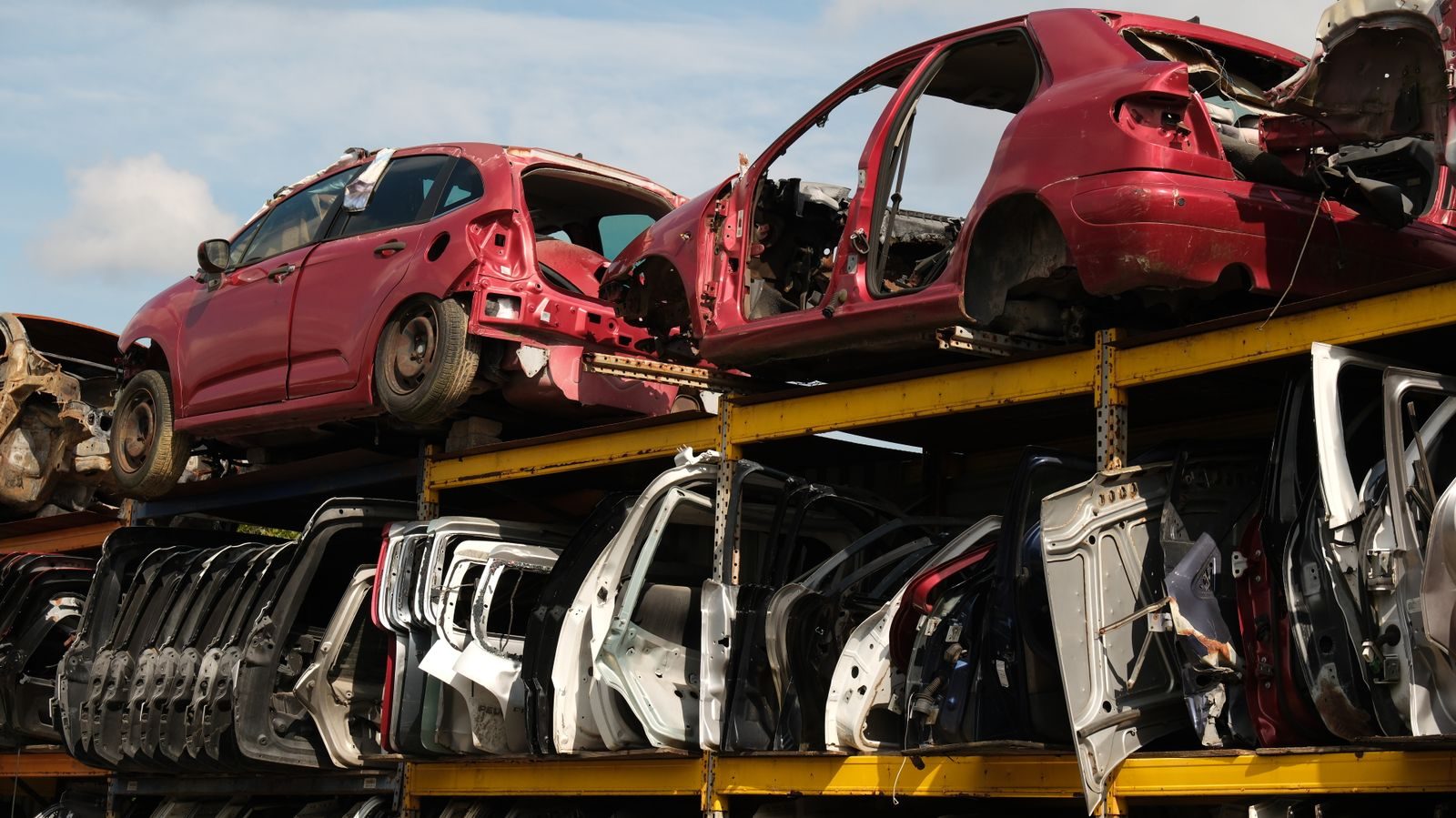
A collection of stacked abandoned car shells in an outdoor junkyard on a sunny day.

Renew Vs Scrap Vs New

📚 Educational Guide · COEPLUS.COM

Renew COE vs Scrap vs Buy New: The Full Cost Comparison

⏱ 7 min read📅 Updated June 2026✅ Verified by COEPLUS Team

HomeResourcesRenew vs Scrap vs Buy New

Your Three Options at COE Expiry

When your vehicle’s COE expires, you face a significant financial decision. The three options are:

Option What It Means Upfront Cost
Renew COE (10 years) Keep your vehicle with a new 10-year COE 100% of current PQP (~S19,432 for Cat A)
Renew COE (5 years) Keep your vehicle with a shorter 5-year COE 50% of current PQP (~S9,716 for Cat A)
Scrap and buy new Deregister your vehicle, claim PARF rebate, buy a new vehicle Full cost of new vehicle (S30,000–S50,000+)
Scrap without replacement Deregister, claim PARF rebate, no new vehicle Nothing — you receive a rebate
Most car owners choose to renew rather than buy new, primarily because the total cost of renewal (even at full PQP) is typically far lower than the total cost of purchasing a new vehicle — especially given Singapore’s high ARF and additional registration fees.

Understanding PARF and ARF

To compare the options fairly, you need to understand two acronyms that significantly affect the maths:

PARF Rebate (Preferential Additional Registration Fee)

When you scrap or export your vehicle before it is 10 years old, LTA refunds a portion of the ARF you paid when the vehicle was first registered. This is called the PARF rebate.

  • The PARF rebate is calculated based on the vehicle’s age at deregistration
  • A vehicle deregistered at exactly 10 years old (when the first COE expires) gets ~50% of the original ARF back
  • Once you renew the COE, you permanently forfeit the PARF rebate — it is gone
Important: Once you renew your COE, you can never claim the PARF rebate for that vehicle, regardless of when it is eventually scrapped. This is a permanent, irrecoverable loss that must be factored into your decision.

ARF (Additional Registration Fee)

ARF is a tax paid when a vehicle is first registered in Singapore. It is calculated as a percentage of the Open Market Value (OMV) of the vehicle. For most passenger vehicles, ARF is 100% of OMV or higher — so a car with an OMV of S0,000 pays S0,000+ in ARF at registration.

Full Cost Comparison

Let’s compare all options for a Cat A vehicle with a 10-year-old COE expiring now. Assumptions: OMV S5,000, ARF paid at registration S5,000, current Cat A PQP S19,432.

Cost Item Renew 10yr Renew 5yr Scrap + Buy New
COE cost S19,432 S9,716 ~S19,432 (new car)
New vehicle price (excl. COE) ~S0,000+
ARF on new vehicle ~S5,000+
PARF rebate received S/bin/sh (forfeited) S/bin/sh (forfeited) +S2,500 (50% of ARF)
Loan interest (7yr, 2.48%) ~S,280 ~S,640 ~S5,000+
Estimated total cost ~S26,712 ~S3,356 ~S20,000+
Monthly payment (7yr loan) ~S,511 ~S56 ~S,500+

⚠ Figures are illustrative. New vehicle prices vary significantly. Consult COEPLUS for a personalised comparison.

📌 In this example, renewing the COE for 10 years costs approximately S3,000 less than buying a new equivalent vehicle — a saving of over 40%.

The Case for Renewing

Renewing makes financial sense in most cases because:

  • Total cost is substantially lower — you avoid the ARF, dealer margins, and full new vehicle price
  • You know your vehicle — its service history, quirks, and condition are known quantities
  • No depreciation shock — a new vehicle depreciates most steeply in its first few years
  • Lower insurance premiums — your No Claims Discount (NCD) is already established
  • Lower monthly payments — even at full Cat A PQP, renewing costs roughly S,511/month vs S,500+ for a new equivalent

The Case for Buying New

Despite the higher cost, buying new may be the better choice if:

  • Your vehicle needs major repairs — if you face a large upcoming repair bill (engine, transmission, bodywork), the cost equation shifts
  • You want an EV — the EV market in Singapore is maturing rapidly, and switching to electric now locks in lower running costs
  • Your vehicle is high-mileage — reliability risk increases on high-mileage vehicles, and unexpected breakdowns add unplanned costs
  • You want modern safety and tech features — lane assist, automatic emergency braking, and connected car features in newer models have real value
  • COE prices are very low — if COE prices are near historic lows, a new vehicle becomes relatively more attractive
The repair threshold rule: As a rough guide, if your vehicle requires repairs costing more than 6 months of the equivalent new vehicle’s monthly loan repayment, buying new starts to make comparative sense.

How to Decide

Question Favours Renewal Favours Buying New
Vehicle condition? Good, well-maintained, low mileage High mileage, known issues, major repairs pending
Budget flexibility? Prefer lower monthly payment Can afford higher monthly cost for a newer vehicle
Driving needs? Same as current vehicle Need different size, towing, EV, or safety features
COE price environment? Current PQP is average or high COE prices are near historic lows
Planning horizon? Stable situation, no major life changes Expecting family expansion, career move, etc.
COEPLUS recommendation: For the majority of Singapore vehicle owners with a well-maintained vehicle, COE renewal is the more financially sound decision. The savings vs buying new are substantial. Use our free Calculator and AI Advisor to run the numbers for your specific situation before deciding.

Get a Personalised Renewal vs New Vehicle Analysis

Tell Chloe your vehicle details and she will help you compare the real numbers for your situation.

Read More...
A view of a city with tall buildings in the background

COE Renewal Process

📚 Educational Guide · COEPLUS.COM

COE Renewal Process: Step-by-Step with SingPass MyInfo

⏱ 5 min read📅 Updated June 2026✅ Verified by COEPLUS Team

HomeResourcesCOE Renewal Process

When to Start the Renewal Process

LTA allows COE renewal up to 3 months before your COE expires. However, the full process — from application to disbursement and official renewal — typically takes 2–4 weeks, and bank approval can take up to 10 working days in some cases.

COEPLUS recommendation: Start 6–8 weeks before expiry. This gives enough buffer for bank processing, any document queries, and LTA registration without risk of your COE lapsing. Do not wait until the last month — a lapsed COE means your vehicle cannot be legally driven until it is renewed or deregistered.

You can check your COE expiry date on your vehicle’s log card or on the OneMotoring portal at onemotoring.lta.gov.sg.

Documents You Need

If you use SingPass MyInfo to fill your application, most documents are retrieved automatically. If applying manually, you will typically need:

Document Purpose Required By
NRIC (front and back) Identity verification All applicants
Vehicle log card Vehicle and COE details All applicants
Latest 3 months’ payslips Income verification Salaried employees
Latest Notice of Assessment (NOA) Income verification Self-employed / commission earners
CPF contribution history (12 months) Employment and income Most banks
Passport + Work Pass For non-citizens EP, S Pass, WP holders
Employment letter Confirms employment status Some banks for foreigners
Using SingPass MyInfo simplifies everything. Your personal details, income data (from IRAS), CPF records, and vehicle information are pulled automatically. Most applicants find they need to provide almost no physical documents when using MyInfo.

What is SingPass MyInfo?

SingPass is Singapore’s national digital identity system, operated by the Government Technology Agency (GovTech). MyInfo is a service within SingPass that allows you to authorise businesses and government agencies to retrieve your personal data from government databases — replacing the need to manually fill in forms or upload documents.

When you use MyInfo for your COEPLUS application, you authorise COEPLUS (and the banks we submit to) to retrieve:

  • Personal details: Name, NRIC, date of birth, address, nationality
  • Employment: Employer name, occupation, CPF contributions
  • Income: Latest NOA figures from IRAS
  • Housing: HDB type (relevant for some bank assessments)
Your data is secure. SingPass MyInfo retrieval is end-to-end encrypted. You control exactly what is shared and with whom. COEPLUS only receives the data you explicitly authorise during the MyInfo consent flow. No data is stored beyond what is necessary to process your application.

Full Step-by-Step Process via COEPLUS

1
Submit Your Application
Visit coeplus.com/submit-coe-renewal/ and complete the application form. Optionally use SingPass MyInfo to pre-fill your details. Provide your vehicle plate number, COE expiry date, preferred loan amount, and tenure.
2
COEPLUS Reviews Your Profile
Our team reviews your application within 1 business day and contacts you to confirm details or request any additional documents. We identify the most suitable banks for your profile.
3
Bank Submission and Approval
COEPLUS submits your application to partner banks. Bank approval typically takes 3–7 working days. We inform you of the approved rate and terms.
4
You Accept the Loan Offer
You review and accept the loan offer from the bank. This can be done electronically — no physical branch visit is typically required.
5
LTA Processes the COE Renewal
The bank disburses the COE amount directly to LTA. LTA processes the renewal — your vehicle’s COE is officially extended for 5 or 10 years from the original expiry date.
6
You Receive Your Updated Log Card
LTA updates your vehicle records and issues an updated digital log card (accessible via OneMotoring). Your first monthly loan repayment begins approximately one month after disbursement.

Typical Timeline

Stage Time Required
Application submission to COEPLUS review 1 business day
Bank submission to approval 3–7 working days
Loan acceptance to disbursement 1–3 working days
LTA renewal processing 1–2 working days
Total typical duration 2–3 weeks from submission
Recommended start time before COE expiry 6–8 weeks

What Happens After Approval

Once your COE renewal is complete:

  • Your COE new expiry date is set 5 or 10 years from the original expiry date — not from the date of renewal. This means renewing early does not shorten your COE period.
  • Your vehicle log card is updated digitally on the OneMotoring system. You can download the updated log card from the LTA OneMotoring portal.
  • Monthly repayments begin approximately 1 month after loan disbursement. Your bank will send your repayment schedule.
  • Road tax renewal is not affected by COE renewal — these are separate obligations due on your vehicle’s road tax anniversary.
COE renewal does not reset your road tax, insurance, or inspection (VICOM) schedules. These continue on their existing dates regardless of when your COE is renewed.
PARF rebate: By renewing your COE, you permanently forfeit your PARF rebate. This is irrecoverable — once renewed, the PARF cannot be claimed when the vehicle is eventually deregistered. Factor this into your decision before proceeding.

Start Your COE Renewal — Free, Fast, Hassle-Free

COEPLUS handles the entire process for you at no charge. From bank comparison to LTA submission — we take care of it all.

Read More...